Dress Codes Explained: Casual to White Tie
Dress codes explained from casual to white tie: what each one requires and how to pick a gown that matches the formality level.
Shop the Styles in This Guide


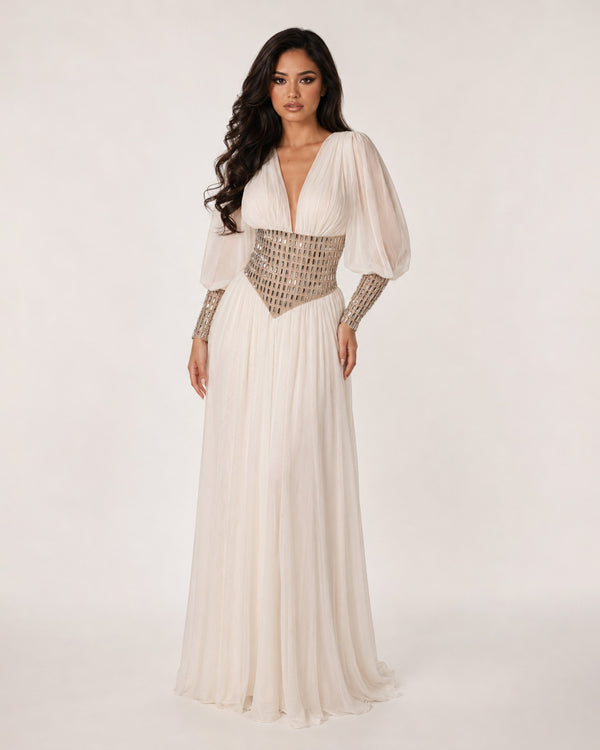

What does a dress code actually mean on an invitation? From casual to white tie, each dress code sets a different bar for coverage, formality and fabric, and getting it wrong usually means being noticeably overdressed or underdressed for the room. This guide walks through each dress code in order, from the most relaxed to the most formal, with a real example gown for three of the most common ones.
Every dress mentioned below is made to your own measurements, in any size, after you order. Browse the full corset dresses collection while you read.
What Does "Dress Code" Mean?
A dress code is simply the formality level a host expects guests to match, usually printed on the invitation itself. Dress codes run on a loose but widely understood scale: casual, cocktail, semi-formal, black tie, black tie optional, and white tie, each one stricter than the last about coverage, fabric and how dressed-up the room will be.
Side-by-side: which dress code is dressier?
| Dress code | Typical length | What it means for women |
|---|---|---|
| Casual | Any | Everyday clothes, a sundress or smart separates. |
| Smart elegant | Knee to midi | A polished day-to-evening dress or tailored outfit, a step above smart casual. |
| Cocktail | Mini to midi | A dressy short or midi dress with shine or detail. |
| Semi-formal | Midi to floor | A dressier midi or a simple long dress. |
| Formal | Usually floor | A long evening gown is the safe choice. |
| Black tie optional | Floor, or a very formal short dress | A gown is always right; a formal shorter dress is allowed. |
| Black tie | Floor | A floor-length evening gown. |
| White tie | Floor | The most formal: a full evening gown, often with long gloves. |
Invited to a banquet or a soirée? See what to wear to a banquet and the soirée dress code.
Casual
Casual is the most relaxed end of the scale and rarely applies to evening events that call for a gown. It generally means everyday clothing: a sundress, separates or smart-casual pieces, nothing as formal as an evening gown. If your invitation says casual, an evening gown of any kind will usually be more dressed-up than the room expects.
Cocktail Attire
Cocktail attire calls for a shorter, polished dress, typically knee-length to tea-length, with enough shine or detail to read as dressed-up without reaching full evening-gown formality. Our cocktail attire dress code guide goes through fabric, length and styling in more depth. Shop the full cocktail dresses collection.
Semi-Formal
Semi-formal sits between cocktail and black tie: a longer dress is welcome but not required, and both midi and floor-length options read correctly in the room. Our semi-formal attire guide covers how to choose a length and fit for this dress code specifically. Shop the full semi-formal dresses collection.
Black Tie
Black tie calls for a floor-length evening gown, full stop — this is the dress code most people picture when they imagine a formal gala or wedding. Structure, shine and a more elaborate bodice are all welcome here. Our black-tie guest dress guide covers exactly what to wear and what to avoid.
Black Tie Optional
Black tie optional gives guests a choice: a full-length gown is always correct, but a dressy shorter dress is also acceptable if it is clearly formal rather than casual. Our black-tie optional guide explains how to read the room and pick the right length when the invitation leaves it open.
White Tie
White tie is the most formal dress code that exists, reserved for state dinners, royal events and the most traditional galas. It calls for a full-length gown with more coverage than black tie — long sleeves or a covered shoulder line are traditional, along with the most elaborate fabric and detail a wardrobe has. Our white-tie attire guide covers exactly what this dress code expects.
Black tie vs white tie
Both call for a floor-length gown, but white tie is stricter: the most formal fabrics and detail, more traditional coverage and often long evening gloves. Black tie leaves more room for slits, open backs and modern shapes. See our black tie dress code guide and our white tie guide.
Black tie vs formal
Black tie is a fixed code: a floor-length evening gown. "Formal" on its own is a little looser; a long gown is still the safe choice, but a very elegant cocktail-length dress can sometimes work. Read our formal attire guide for the details.
Cocktail vs semi-formal
Cocktail usually means a short or midi party dress with some shine. Semi-formal is a touch dressier: a polished midi or a simple long dress. If you are unsure, a dressy midi works for both. Compare our cocktail attire guide and semi-formal guide.
What does smart elegant mean?
Smart elegant sits between smart casual and cocktail: a polished knee-length or midi dress, or tailored separates, with refined shoes and simple jewellery. It is not a call for an evening gown. For the next step up, see our cocktail attire guide.
Three Dress Codes, Three Real Gowns
None of these is a strict uniform — each dress code allows some range — but these three real gowns show the formality jump between cocktail, black tie and white tie clearly.

Champagne Crystal Corset Mini Dress
A short, beaded corset mini — the right formality level for a cocktail dress code, not a black-tie one.

Black Crystal V-Neck Sculpted Corset Mermaid Gown
Floor-length, structured and sculpted — this is black-tie formality, built on a corset bodice with crystal detail.

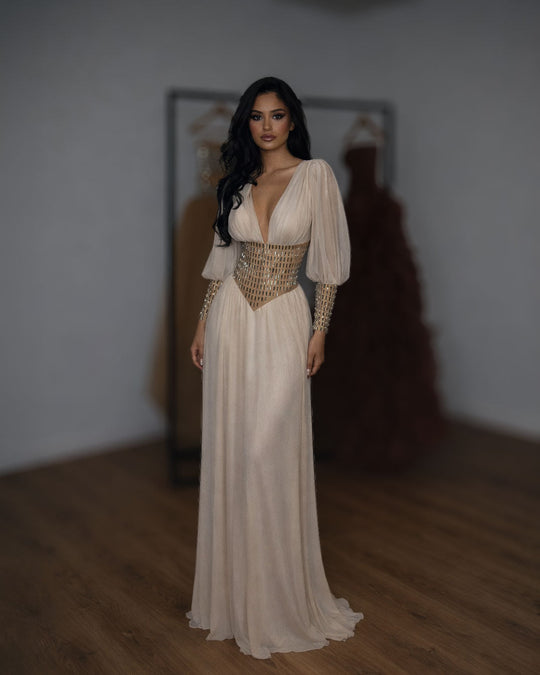
Ivory Chiffon Crystal Corset Long Sleeve Gown
Full-length with long sleeves and a covered bodice — the extra coverage that reads correctly for a white-tie dress code.
Quick Way to Check Your Dress Code
- Read the invitation's exact wording first — "black tie," "black tie optional," "semi-formal" and "cocktail" each mean a different length and formality level, not interchangeable phrasing.
- When in doubt between two dress codes, dress toward the more formal one rather than the more casual one.
- Please confirm your event date with our team on WhatsApp before ordering, so we can plan your gown around the right dress code and timeline together.
- Read the deeper guide linked under each dress code above for styling detail specific to that formality level.
Frequently Asked Questions About Dress Codes
What is the difference between black tie and black tie optional?
Black tie requires a full-length evening gown. Black tie optional allows either a full-length gown or a clearly formal shorter dress, giving guests a choice.
Can I wear a short dress to a semi-formal event?
Yes. Semi-formal welcomes both midi and floor-length dresses, so a polished shorter dress reads correctly for this dress code.
What makes white tie more formal than black tie?
White tie calls for the same floor-length formality as black tie but with more coverage expected, traditionally long sleeves or a covered shoulder line, along with the most elaborate fabric and detail.
What should I wear if the invitation just says "formal"?
"Formal" on its own is usually closer to black tie than semi-formal — a full-length evening gown is the safer choice when the wording doesn't specify further.
Does Reinee Couture make gowns for every dress code on this list?
Yes. Every gown is made to your own measurements, in any size, after you order, whether you need a cocktail-length piece or a fully covered white-tie gown.
Shop by formality: browse cocktail dresses, semi-formal dresses or the full corset dresses collection.
By the Reinee Couture editorial team. November 2026.
Keep reading