Formal Dresses for Wheelchair Users: Seated Fit
Formal dresses for wheelchair users: seated hem length, no train, soft skirts, a smooth back and necklines that leave the arms free to move.
Découvrez les modèles de ce guide


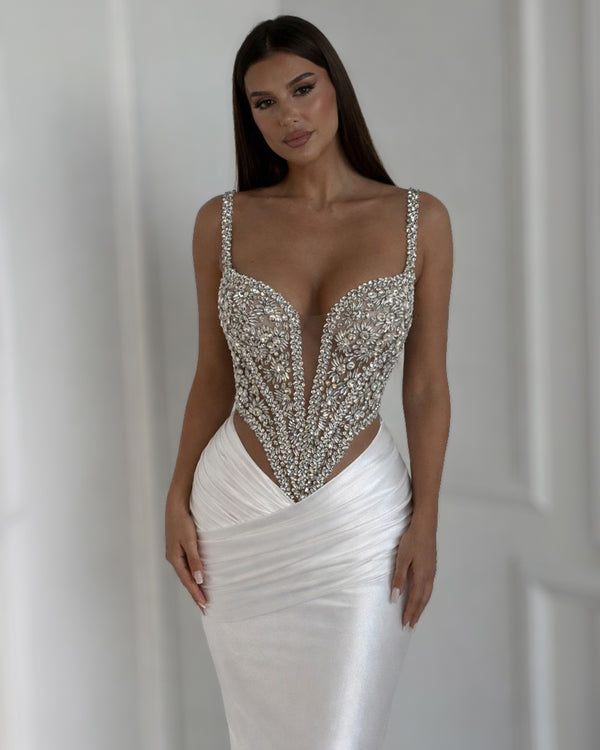

What formal dresses work best for wheelchair users? The most comfortable formal dresses for wheelchair users are designed around a seated fit: a hem that clears the footplate and wheels when you sit, no train, a skirt that drapes softly over the knees, smooth fabric across the back and seat, and a neckline or strap style that leaves your arms free to move. Embellishment placed on the bodice front rather than the back keeps the sparkle where people see it and away from where you sit.
Formal wear is usually designed and fitted standing up, which means many details look different, or feel different, once you are seated for the whole evening. Every body and every chair is different, so there is no single right dress. This guide walks through the questions worth asking about length, skirt shape, bodice, back, sleeves and fabric, so you can choose an evening gown that looks considered from every angle and feels comfortable from the first photo to the last dance. To browse silhouettes, see our Evening Dresses.
Why seated fit matters
When you sit, the body changes shape in ways a standing fitting does not show. The hips and thighs widen slightly, the waist moves forward, the back of the skirt is compressed under you, and the hem rises at the front while extending at the back. A gown that is a perfect length standing can pool around the feet when seated and reach the wheels or casters. A bodice that lies flat standing may press at the hip or ride up. Thinking about the seated position first avoids most of these problems.
Getting the hem length right
Length is the detail most worth checking.
- Measure seated: Note the length from waist to the point where you want the hem to fall while sitting in your own chair, as well as the standing measurement.
- Clear the wheels: A hem that falls just above the footplate or at the ankle when seated keeps fabric away from wheels and casters.
- Front and back: Seated, the back of the skirt is longer than needed. Mention this when you discuss length, and ask what is possible for the design you like.
- Shoes: Wear the shoes you plan to wear when you check the hem, because they change where the fabric falls.
Our guide on how to take measurements for an evening gown explains each standard measurement, and you can add your seated measurements alongside them when you contact us.
Trains and long skirts
A train is the detail most likely to catch in the wheels or under a chair, so a gown without a train is usually the easiest choice. If you love a long, flowing skirt, look for one that ends at the floor rather than extending behind it. Our guide to types of dress trains explains the lengths, which helps when you read a product description.
Skirt shapes for sitting
- Flowing chiffon and soft A-line: A soft skirt drapes over the knees, falls neatly when seated and photographs well from the front.
- Column: A straight skirt looks sleek, but a very close fit can pull across the thighs when you sit. Look for some ease through the hips, or a slit that relaxes the line.
- Mermaid and trumpet: These are fitted through the thighs and flare at or below the knee, the point where the body bends when seated. The fitted section can bunch, so they are worth trying seated before you choose one.
- Two-piece sets: A separate top and skirt can be easier to put on, and each piece can sit comfortably on its own.
- Short and midi lengths: A shorter dress keeps the hem well away from the wheels. Check how far the skirt rises when you sit.
Gowns that suit a seated fit


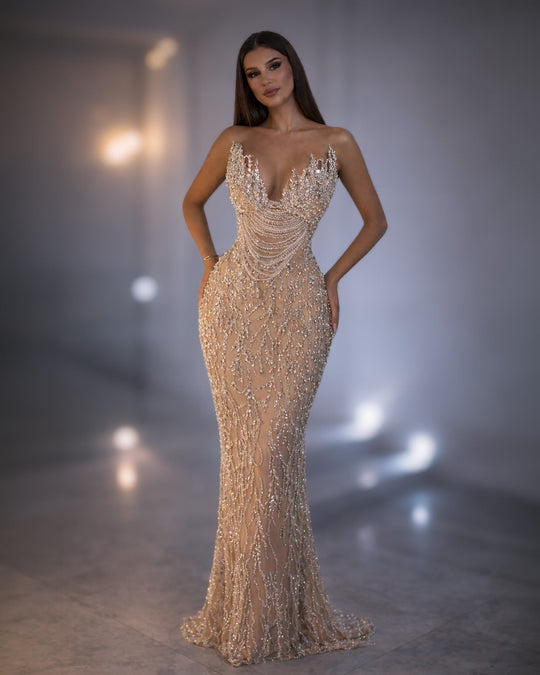
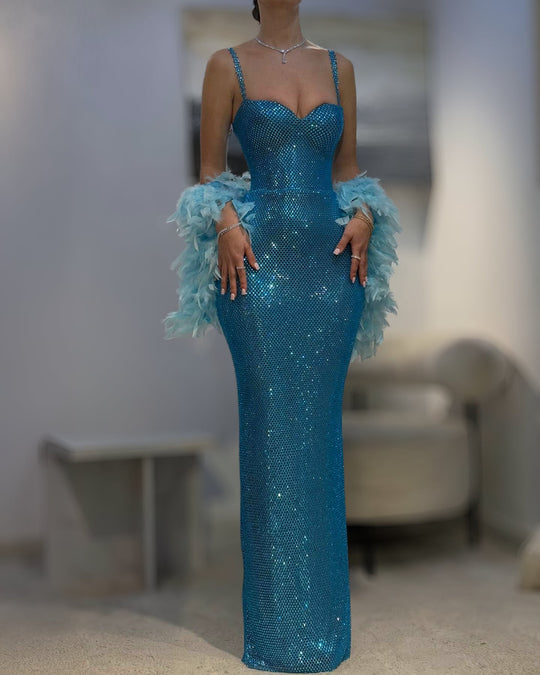
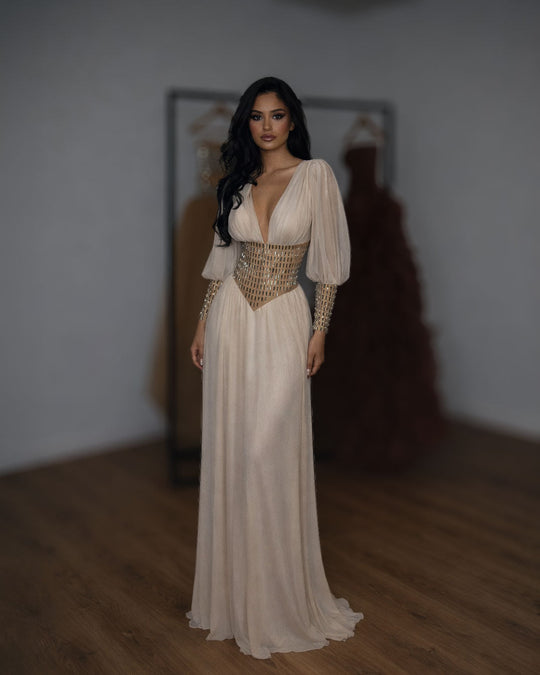
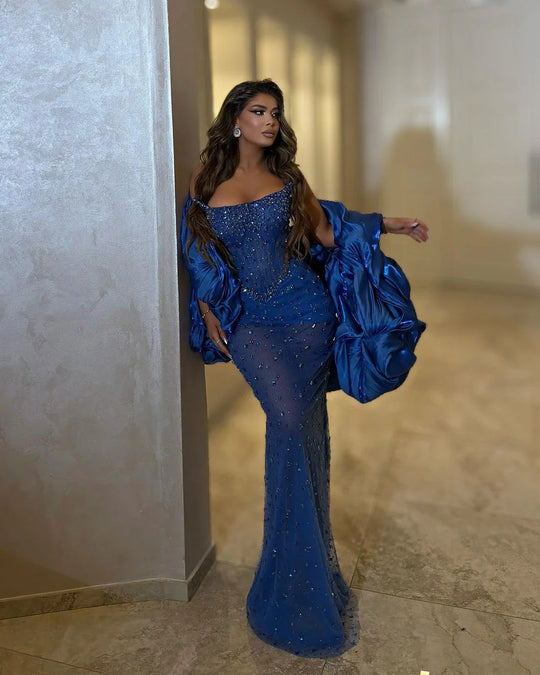
The blush gown has a soft chiffon skirt that drapes when seated. The pink gown has a halter neckline that leaves the shoulders and arms free. The white set comes as two pieces, so the top and skirt go on separately. Ask our team about length and fit for whichever design you choose.
Bodice and corset comfort
A structured bodice gives shape and support, and it shows beautifully in seated photographs because the upper body is the focus. The key is where the bodice ends. A longline corset that extends toward the hip can press when you sit, while a bodice that ends at the natural waist usually bends more easily. Sit, lean forward and reach to the side while trying a structured gown, and check that the boning does not dig in. Our guide on how a corset evening gown should fit covers the standing fit points.
The back of the gown
You sit against the back of the dress all evening, so it deserves as much thought as the front.
- Embellishment: Crystals, beading and appliqué on the lower back or seat can feel uncomfortable and may wear against the chair. Front-focused embellishment avoids this.
- Bows and bulk: Large bows, ruffles or layered draping at the back can press against the backrest.
- Closures: Ask about the back closure for the design, since you will lean against it.
- Open backs: A low back avoids fabric bunching against the chair, which some people find comfortable.
Necklines, straps and sleeves
If you propel your own chair, arm movement matters. Strapless bodices, halter necks and thin straps leave the shoulders free. Off-the-shoulder bands sit across the upper arm and can limit how high you can lift your arms, and long, loose or draped sleeves can brush the wheels. Fitted long sleeves are an option if you want coverage. Remember too that standing guests often see the neckline from above, so check how a deep V or sweetheart looks from that angle.
Fabric and embellishment
Smooth fabrics and soft drapes generally feel best for long periods of sitting. Heavy all-over embellishment adds weight across the lap and can feel stiff when seated, while embellishment concentrated on the bodice gives the same sparkle where it is most visible. For care tips on crystal or sequin finishes, our care guides explain how to keep them looking their best.
Practical details for the event
- Transfers: If you transfer to another seat or a car, practise in the gown so you know how the skirt behaves.
- Bags: A wristlet or a small bag that clips to the chair keeps your hands free.
- Wraps: A wrap or stole adds warmth without the restriction of a fitted jacket. Our guide on what to wear over a formal dress lists options.
- Photos: Plan a few shots at eye level, so the photographer captures the gown from the angle it was chosen for.
Ordering a formal dress
Every gown in this guide is made to order in 2 to 3 weeks before it ships. A 50% deposit begins the order, and the balance follows once you approve the final video. We ship to more than 200 countries. Send questions about length, skirt shape, the back of a design or seated fit to our team on WhatsApp at +1 646 204 0913.
Frequently asked questions about formal dresses for wheelchair users
What length should a formal dress be for a wheelchair user?
Many people choose a hem that falls at the ankle or just above the footplate when seated, so the fabric stays clear of the wheels. Measure the length while sitting in your own chair.
Can wheelchair users wear a mermaid gown?
Yes, but the fitted section around the knee can bunch when seated. Try the shape seated first, or look at softer skirts that drape more easily.
Are corset dresses comfortable when sitting?
They can be. A bodice that ends at the natural waist usually bends more easily than a longline corset, and the boning should not press when you lean forward.
Which necklines allow the most arm movement?
Strapless, halter and thin-strap styles leave the shoulders free. Off-the-shoulder bands can limit how high you lift your arms.
Could the pink halter gown be ordered in a different colour?
As it is made to order, a different colour can be raised with our team on WhatsApp at +1 646 204 0913.
Dressed for every angle
A formal dress chosen for a seated fit looks considered in every photograph and stays comfortable all evening. Explore our Evening Dresses and share your questions with our team before you order.
Reinee Couture seated fit notes, November 2026.
À lire aussi