What to Wear to a Jewish Wedding as a Guest
What to wear to a Jewish wedding as a guest: reading the dress code, coverage for Orthodox and synagogue ceremonies, colours, dancing and layers.
Разгледайте моделите в това ръководство



What should you wear to a Jewish wedding as a guest? Follow the invitation and the couple's community: for most evening Jewish weddings a floor-length gown or an elegant cocktail dress is right, while an Orthodox wedding usually calls for covered shoulders and upper arms, a modest neckline and a hem below the knee. Avoid white, choose a dress you can dance in for the hora, and bring a wrap or shawl in case the ceremony needs more coverage than the party.
Jewish weddings range from secular and Reform celebrations to Conservative and Orthodox ones, and the expectations for guests vary with them. What they usually share is a ceremony under the chuppah, the breaking of a glass, a joyful shout of congratulations and a reception with a great deal of dancing. This guide covers how to read the dress code, coverage, colours, silhouettes that work for dancing, accessories and practical timing, with gowns to compare. For guest styles in one place, browse our Wedding Guest Dresses.
Start with the invitation and the community
The invitation is your first clue. Wording such as black tie, formal or cocktail tells you the expected formality. The venue and the time help too: an evening ballroom wedding is usually formal, while an afternoon garden ceremony can be a little lighter. If you know the couple belongs to an Orthodox community, or the ceremony will take place in an Orthodox synagogue, plan for more coverage. When in doubt, ask the couple or a family member. It is a thoughtful question, and most hosts are glad to answer it.
- Secular or Reform wedding: Dress as you would for any wedding with the same dress code on the invitation.
- Conservative wedding: Similar to a formal wedding, though a wrap for the ceremony is a considerate choice in a synagogue.
- Orthodox wedding: Covered shoulders and upper arms, a modest neckline and a skirt below the knee, ideally floor length.
- Black-tie evening wedding: A floor-length gown is expected. Our black-tie wedding guest guide explains the details.
Coverage: what to plan for
Coverage matters most at Orthodox weddings and during ceremonies held in a synagogue. A practical approach is to choose a gown that already has sleeves or a high neckline, or one that comes with a matching shawl or wrap you can wear for the ceremony and remove later if the setting allows. Sheer illusion fabric can look elegant, but at a strictly observant wedding it may not count as covered, so a solid layer is the safer option. Watch the slit too: a high slit that is fine at a secular party may be too revealing for an Orthodox celebration. Our modest evening gown checklist walks through necklines, sleeves and hems in more detail.
For a ceremony in a house of worship more generally, our guide to what to wear to a church wedding covers similar etiquette from another tradition.
Colours for a Jewish wedding
Avoid white and ivory
As at most weddings, white and very pale ivory are best left to the bride.
Jewel tones
Sapphire, royal blue, emerald and deep purple look rich at evening receptions and photograph well under ballroom lighting.
Soft pastels and metallics
Ice blue, blush, champagne and silver suit spring and summer weddings and feel celebratory without competing with the bride.
Black
Black is widely worn at formal evening weddings. If you are unsure about a particular family, our guide on wearing black or red to a wedding covers how to decide.
Dress for dancing
Dancing is often the heart of a Jewish wedding reception. The hora, a circle dance where guests link arms and move quickly around the room, can last a long time, and the couple may be lifted on chairs above the crowd. Choose a silhouette that lets you move: a column or fitted gown with a slit, a skirt that clears the floor slightly, or a dress with stretch through the bodice. Make sure your shoes stay on when you move quickly, and consider bringing a pair of flats for the dance floor. Some Orthodox weddings have separate dancing for men and women, divided by a partition called a mechitza; the coverage you choose for the ceremony usually carries through the evening.
Jewish wedding guest gowns to compare


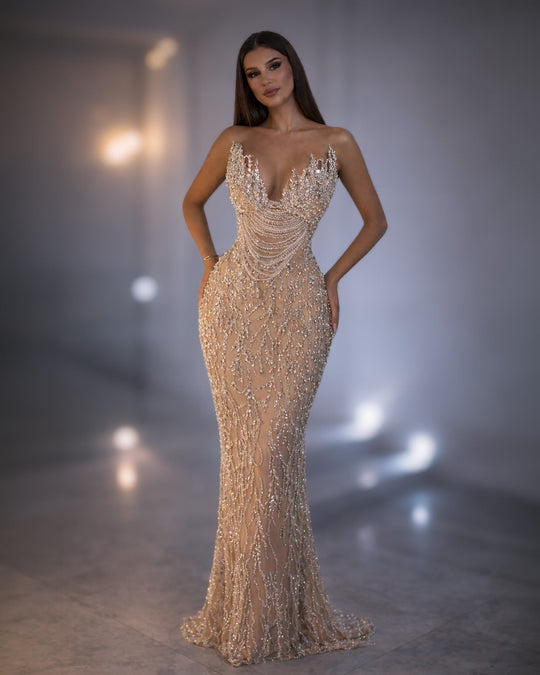
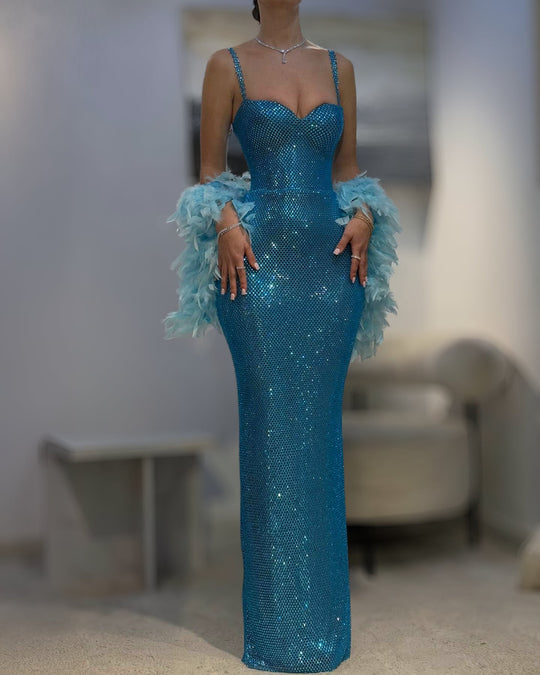
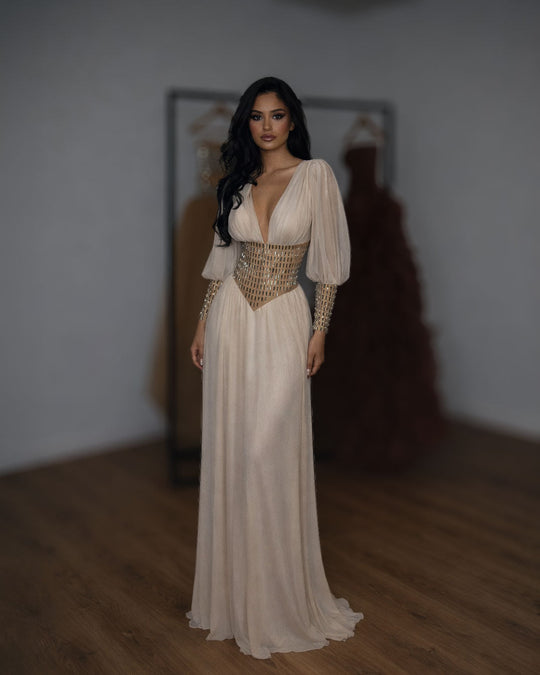
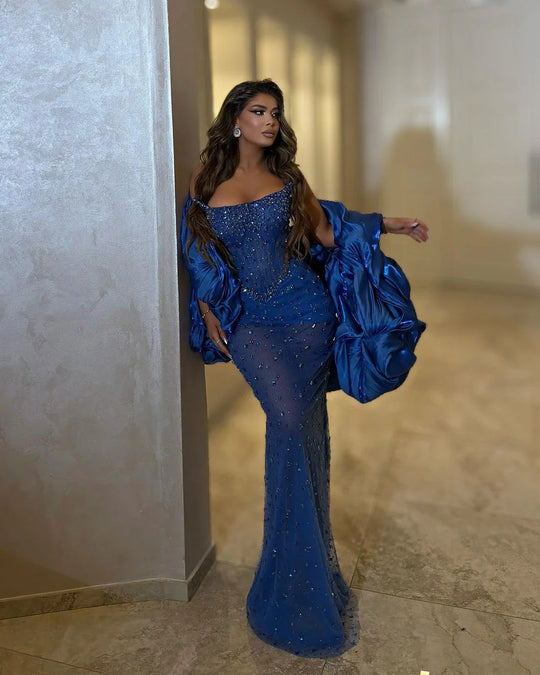
The purple lace gown offers sleeves and a high neckline, the ice blue gown comes with its own shawl for the ceremony, and the sapphire gown's satin wrap frames the arms for a dramatic black-tie look. More covered styles are in our Long Sleeve and Modest Evening Gowns.
Accessories and layers
- A shawl or wrap: The simplest way to add coverage for the ceremony. Choose one in a matching or neutral shade.
- A bolero or cropped jacket: Neat over a strapless gown, and easy to keep on all evening.
- Jewellery: With a crystal or beaded gown, simple earrings are enough. Skip a necklace if the gown has a choker.
- Shoes: A heel you can dance in, or flats tucked into your bag for the hora.
- A small clutch: Room for a phone, lip colour and a few tissues for the emotional moments.
For more layering options, see our guide on what to wear over a formal dress.
Timing and the shape of the day
Many Jewish weddings begin with a reception before the ceremony, followed by the chuppah, then a long dinner with speeches and dancing. A Saturday-evening wedding often starts after sundown, so the celebration may run late. Plan for a long evening: a comfortable fit, shoes that last and a light layer for air-conditioned rooms. If you are travelling for the wedding, pack the gown so the shawl or wrap travels with it.
Other etiquette to keep in mind
Arrive on time for the ceremony, and follow the lead of other guests for seating, which may be separate for men and women at some Orthodox weddings. Keep phones away during the ceremony unless the couple invites photos. When the glass is broken, it is customary to call out "Mazel tov" with everyone else. If you are unsure about any custom, a quiet question to a fellow guest is always welcome. For general guest pitfalls, see what not to wear to a wedding.
Ordering your guest gown
Every gown on this page is made to order in 2 to 3 weeks before it ships, so allow time before the wedding date. A 50% deposit starts the order, and the balance is paid after you approve the final video of your finished dress. We ship to more than 200 countries, and you can ask our team about coverage or any design on WhatsApp at +1 646 204 0913.
Frequently asked questions about what to wear to a Jewish wedding
Do I need to cover my shoulders at a Jewish wedding?
At an Orthodox wedding, yes. At secular and Reform weddings it is usually not required, though a wrap for a synagogue ceremony is a considerate choice.
Can I wear black to a Jewish wedding?
Black is widely worn at formal evening weddings. If you are unsure about the family's preference, choose a jewel tone instead.
Is a long gown appropriate for a Jewish wedding guest?
Yes, especially for evening and black-tie weddings. At Orthodox weddings a floor-length skirt is a simple way to meet the coverage expectation.
What shoes should I wear for the hora?
Shoes that stay securely on your feet, such as a block heel or strappy sandal, and a pair of flats for the busiest part of the dancing.
Is the sapphire gown available in a softer colour for a daytime wedding?
The gown is made to order, so a softer shade can be explored with our team on WhatsApp at +1 646 204 0913 ahead of your order.
Celebrate with confidence
Read the invitation, respect the community's customs, choose a dress you can dance in and bring a layer for the ceremony. Explore our Wedding Guest Dresses to find your look.
Reinee Couture ceremony etiquette notes, November 2026.
Прочетете още