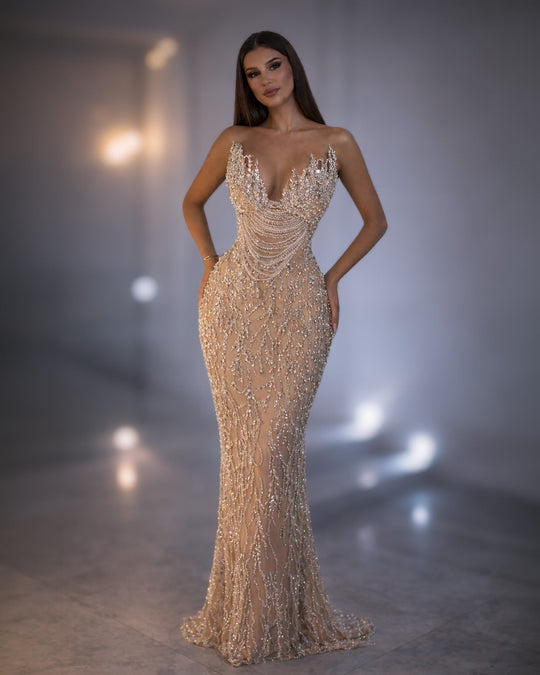
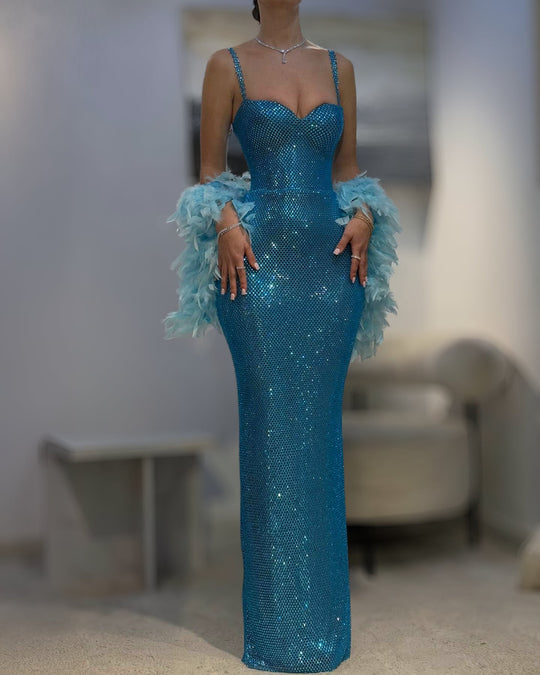
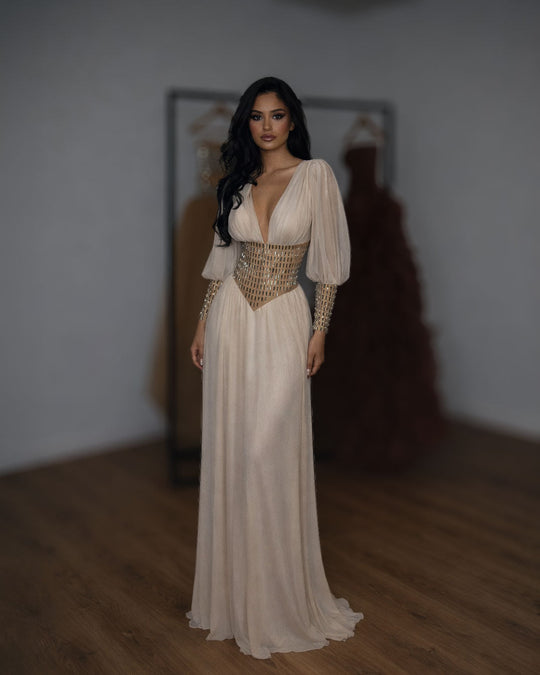
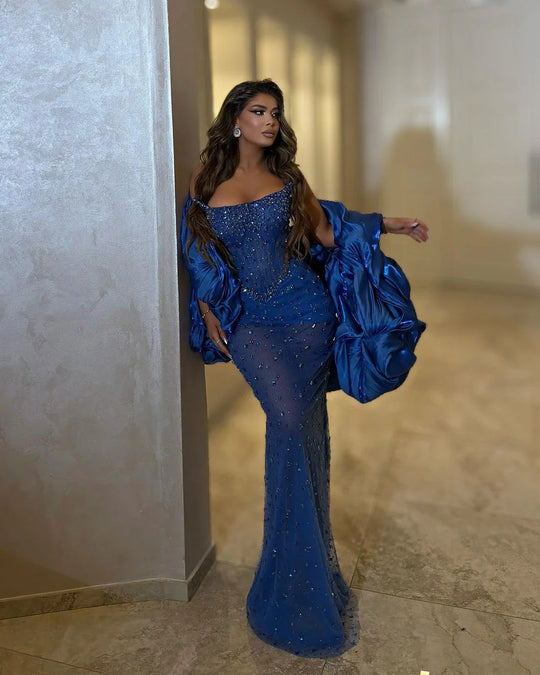
Types of Dress Trains: Sweep to Cathedral
Types of dress trains explained: sweep, court, chapel, cathedral and royal lengths, plus Watteau, detachable and draped overlay trains, and how to choose.
Se modellerna i den här guiden
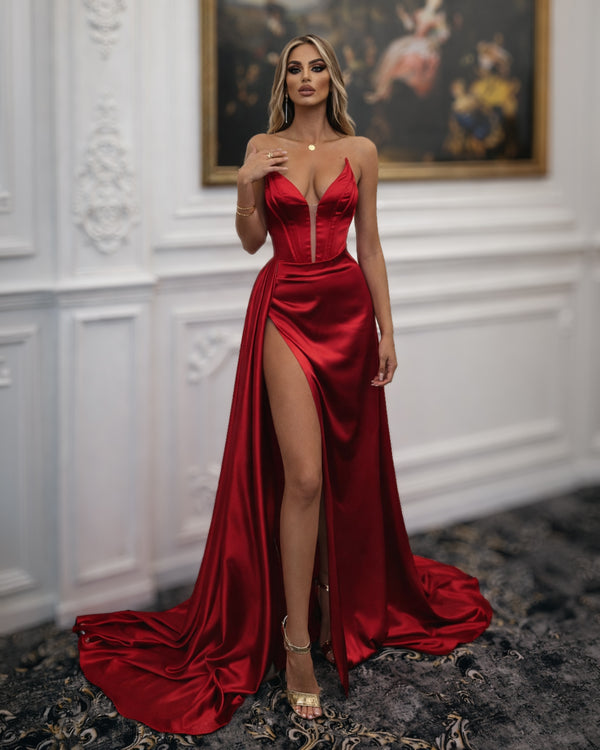


What are the main types of dress trains? Trains are usually named by length: a sweep train just brushes the floor, a court train extends a little further behind you, a chapel train reaches noticeably longer, and cathedral and royal trains stretch the furthest for the most formal settings. Beyond length, trains are also described by how they are attached, for example a train cut into the skirt, a Watteau train falling from the shoulders, a detachable train or a draped overlay that flows from the waist.
A train changes how a gown looks from behind, how it photographs and how you move in it. Choosing one means balancing drama with practicality: the venue, the length of the evening and how much you plan to dance all matter. This guide explains each train type, roughly how long it is, where it works best and how to manage it on the day. To see trains in different styles, browse our Dresses With a Train.
Train types by length
There is no single official measurement for each train, and designers use the names slightly differently. The lengths below are common guides, measured from where the skirt meets the floor at the back.
| Train | Approximate length behind you | Best for |
|---|---|---|
| Sweep or brush | Just touching the floor, up to about 30 cm | Evening events, prom, galas, dancing |
| Court | Around 1 metre | Formal dinners, black-tie, smaller ceremonies |
| Chapel | Around 1.2 to 1.5 metres | Formal ceremonies and grand entrances |
| Cathedral | Around 2 metres or more | Very formal ceremonies in large spaces |
| Royal or monarch | Around 3 metres or more | The most formal occasions with plenty of room |
Sweep train
The sweep train, sometimes called a brush train, is the shortest. The back of the skirt is cut a little longer than the front, so it gently trails on the floor as you walk. It adds movement and a finished look in photos without getting in the way, which makes it the most practical choice for evening gowns, prom and any event with dancing.
Court train
A court train extends further behind you than a sweep train and gives a clear, elegant line from the back. It still feels manageable for most of an evening, especially if you gather it over your arm in crowded spaces. Court trains suit black-tie dinners and formal events where you want a little more presence.
Chapel train
A chapel train is long enough to create a real entrance. It flows well on stairs and aisles and photographs beautifully from behind. For a long evening, a chapel train is often bustled after the formal part of the event, so you can move freely afterwards.
Cathedral and royal trains
Cathedral and royal trains are the longest and most dramatic. They are made for large venues, long aisles and ceremonies where the gown is the centrepiece. They usually need a helper to arrange them and a plan for the rest of the evening, such as a bustle or a detachable section.
Train types by construction
Attached train
The most common train is cut as part of the skirt, so the back panels simply continue onto the floor. It moves as one piece with the gown and keeps a smooth line.
Watteau train
A Watteau train falls from the shoulders or upper back rather than from the waist. It creates a long, flowing line down the back and pairs well with simpler skirts.
Detachable train
A detachable train fastens to the gown with hooks, buttons or a hidden band. You can wear it for the entrance and photos, then remove it for dinner and dancing.
Draped or overlay train
Some trains are made from a separate layer of fabric draped from the waist or hips over the skirt. A sheer or contrasting overlay adds movement and colour without the weight of a full skirt extension. Our guide to cape details, shawls and trains compares these drapes in detail.
Gowns with trains to compare


These gowns show three different approaches: a draped satin train, a sheer overlay train in a contrasting colour and an extended lace train. If you want to know how long the train is on a specific design, ask our team on WhatsApp at +1 646 204 0913.
How to choose a train length
- The venue: Long aisles and grand staircases suit longer trains. Small rooms, rooftops and crowded spaces suit a sweep or court train.
- The ground: Grass, gravel and sand catch on long trains. Outdoor events usually work best with a shorter train.
- The evening: If you plan to dance, choose a short train or one that can be bustled or removed.
- Your silhouette: A mermaid or column gown with a train creates a long, sleek line, while a fuller skirt with a train looks more traditional.
- Photos: A train looks most dramatic in full-length shots from behind or from the side, so plan a few of those.
Managing a train on the day
Never step backwards in a train; turn by walking in a small curve so it swings around behind you. On stairs, lift only the front of the skirt and let the train follow. In crowded rooms, gather the train over your arm. For longer trains, a bustle lifts the fabric off the floor after the ceremony or entrance, and our guide on how to bustle a dress explains the main bustle styles.
Caring for a train
- Check the hem after outdoor photos for leaves, grit or damp marks.
- Spot clean small marks with a barely damp cloth, and leave larger cleaning to a formalwear specialist.
- Store the gown with the train folded loosely in acid-free tissue rather than hanging its full weight from the shoulders.
Ordering a gown with a train
Every gown on this page is made to order in 2 to 3 weeks before it ships. A 50% deposit starts your order, and the balance is paid after you approve the final video. We ship to more than 200 countries, and you can ask about a design's train, slit or silhouette on WhatsApp at +1 646 204 0913.
Frequently asked questions about dress trains
What is the most practical train length?
A sweep train is the easiest to manage. It adds movement and a polished look without catching underfoot, so it suits evenings with dancing.
What is the difference between a chapel and a cathedral train?
A cathedral train is longer. Chapel trains are commonly around 1.2 to 1.5 metres behind you, while cathedral trains usually reach about 2 metres or more.
Can you dance in a dress with a train?
Yes, if the train is short, bustled or detachable. With a longer train, gather it over your arm or bustle it before the dancing starts.
Do evening gowns have trains?
Many do, usually a sweep or court train. Longer trains are more common for very formal ceremonies.
Is the blush pink lace gown available in other colours?
It is made to order, so another colour can be discussed with our team on WhatsApp at +1 646 204 0913.
Make your entrance
From a soft sweep to a sheer overlay, a train adds movement and drama to any gown. Explore our Dresses With a Train to find the one for your event.
Reinee Couture silhouette notes, November 2026.
Läs vidare